



Volvo S80
Five years ago, the launch of the S80 heralded a whole new beginning for Volvo. Out went the familiar boxy styling, replaced by distinctive curves as the Swede set its sights on BMW, Mercedes and Audi.
And while the S80 hasn't brought the kind of sales enjoyed by the German brands, it has carved itself a respectable niche. Now Volvo has given its premier model a facelift, plus introduced some important new technology. We got behind the wheel to see if the Swedish star has upped its game.
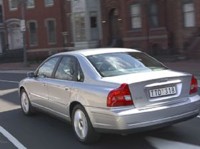
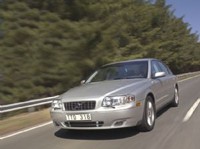
The manufacturer must be pretty happy with its flagship model, because despite the stiff competition, this is only a minor makeover. Its exterior has been little more than tinkered with. Steve Harper, Volvo's chief designer, said: "The S80 is about pleasing the senses, so a lot of attention has been paid to the detail in an attempt to make the car even more elegant." At the front it has a new bumper and revised grille with chrome detailing, which is complemented by additional brightwork on the lower air intake. At the back is a redesigned colour-coded bumper, plus smaller clusters with LED brake lamps which illuminate faster than conventional bulbs.
As ever with Volvo, safety plays an important role. Most noticeable are the reworked wing mirrors, which are not only more aerodynamic but allow the air to flow around them, improving visibility by keeping the windows cleaner.
Inside, the new chronograph dials, although not available on all models, have been borrowed from the S60R and V70R, while the centre console is a darker charcoal colour. There are also revised door panels and further chrome detailing, and a new sound system. Walnut wood or aluminium inlays are on the options list.
But it's under the bonnet where the biggest changes have been made. Volvo has introduced its innovative FOUR-C active chassis system as a £1,100 option. The four Cs stand for continuously controlled chassis concept, and the set-up was first seen on the high-performance S60R and V70R. It makes more than 500 readings a second, and constantly changes its settings to give the driver the best, safest and most comfortable ride. However, unlike with the R range, the S80's FOUR-C system has been set up for comfort - with a switch to activate the sport mode. Owners here will get only the two-wheel-drive version - a 4WD model will go on sale in the US and continental Europe.
The active chassis helps ensure the S80 is a very smooth car to drive. It flattens pretty much every road surface, and fills in potholes as well, making for supreme comfort. Aided by the light steering, excellent cruising ability and smooth power delivery, it leaves the driver feeling refreshed and relaxed.
FOUR-C also works well whether coupled to diesel or petrol power. The D5 unit is one of the best oil-burners around, especially if you have to keep an eye on CO2 emissions because of company car tax penalties. With 163bhp and 340Nm of torque, there's more than enough power to send the auto version from 0-60mph in 10.2 seconds and on to a 130mph top speed. The car is also remarkably quiet even when idling.
The bigger 2.9-litre petrol engine covers 0-60mph in 7.2 seconds, and can reach a 155mph top speed. Despite being available only as a four-speed auto, there is instant power when you hit the throttle, as opposed to the oil-burner's momentary lag.
Volvo is offering three trim levels for the S80 - S, SE and Executive. Added to five options packs - winter, family, sports, premium and communications - this gives owners a large variety of specifications to choose from. Other changes to the range include the 2.4T petrol unit being replaced by a larger 2.5T version, while later this year the S80 will gain a smaller 2.0T engine. All of which makes the S80 a fine alternative to the German big three.
(Report By Auto Express May 2003)
Legal | Privacy | Contact Us | Search | Site Map
Volvo Owners' Club Limited® 1962-2024